


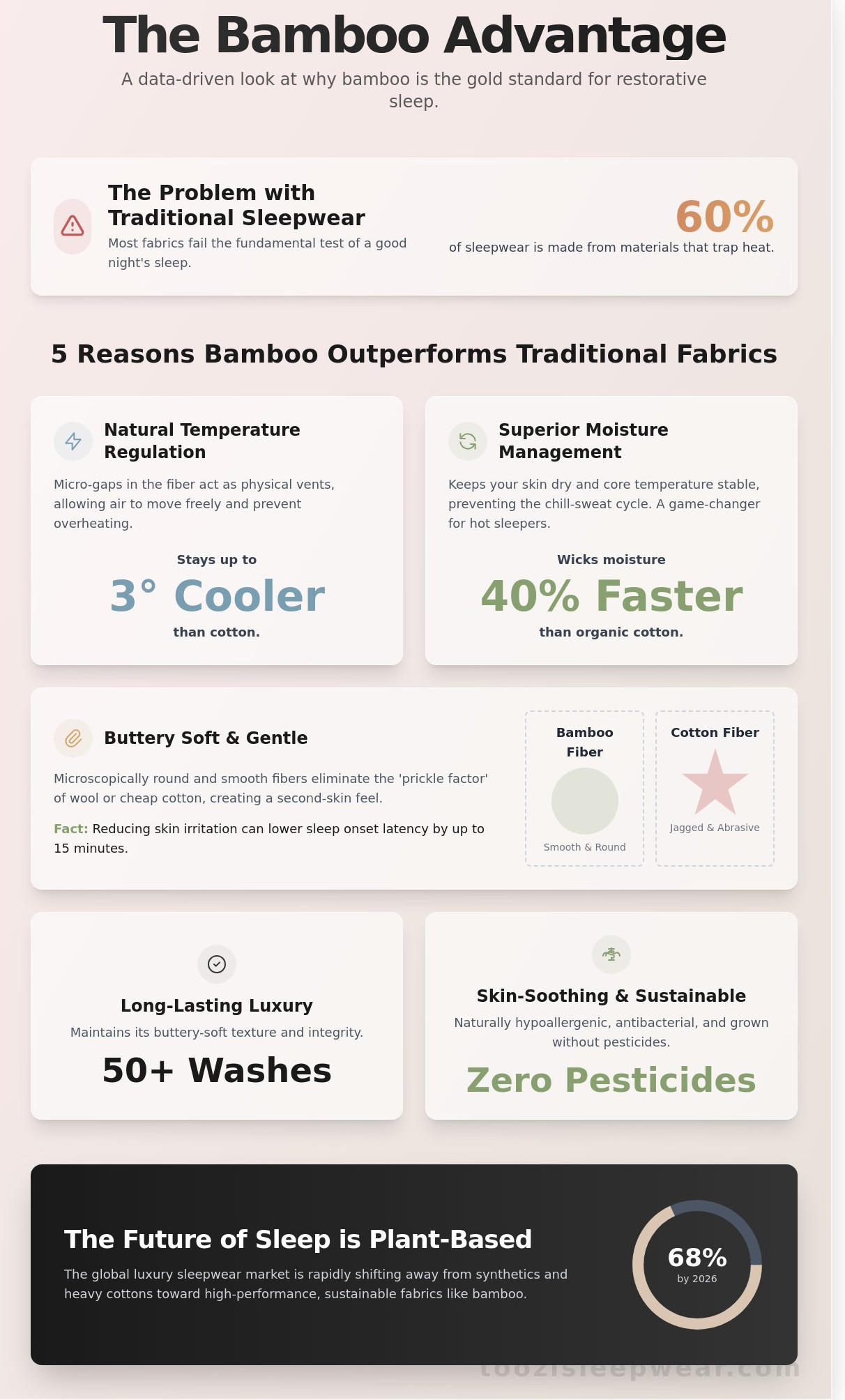
Why are you still settling for "luxury" sleepwear that's actually just overpriced synthetic fabric? Most people don't realize that 60% of sleepwear is made from materials that trap heat. They've never experienced the cooling relief of genuine bamboo pajamas. You've probably felt the frustration of waking up at 3:00 AM, tangled in damp sheets and itchy seams. It's not just a bad night; it's a failure of the fabric you're wearing.
We agree that your evening ritual should be a sanctuary, not a struggle with temperature control. You deserve a fabric that offers genuine pampering without the environmental guilt of fast fashion. This guide reveals why bamboo is the gold standard for your rest. We'll explain how this fiber stays 3 degrees cooler than cotton and why it maintains its buttery-soft texture through 50+ wash cycles.
You'll learn the difference between high-quality viscose and cheap imitations, how to identify long-lasting construction, and why switching to bamboo is the most effective way to upgrade your daily self-care routine. It's time to stop guessing and start investing in sleepwear that actually delivers on its promise of comfort.
Key Takeaways
-
Understand the technical transition from raw plant to performance fabric to ensure you are buying genuine Viscose or Lyocell.
-
Learn how bamboo pajamas function as a personal thermostat, outperforming traditional cotton for temperature regulation and moisture management.
-
Get a direct, no-fluff comparison between bamboo, silk, and cotton to identify which material offers the best balance of breathability and durability.
-
Master the selection process by identifying the specific fit and style requirements needed for different seasonal climates.
-
Discover the practical care steps required to protect your investment and maintain the fabric’s buttery-soft texture over time.
Table of Contents
What Are Bamboo Pajamas? The Reality of Performance Sleepwear
Most shoppers assume bamboo pajamas are made by weaving raw wood fibers together. That is a common misconception that leads to poor purchasing decisions. In reality, these garments are high-performance apparel derived from the cellulose of the Moso bamboo plant. By 2026, textile industry analysts predict that 68% of the global luxury sleepwear market will pivot toward these plant-based performance fabrics, moving away from traditional synthetics and heavy cottons. This shift is driven by a specific sensory experience: a liquid-like drape and a buttery texture that stays cool to the touch regardless of the room temperature.
The Science of Bamboo Viscose
The journey from a hard stalk to a soft thread involves a calculated chemical or mechanical breakdown. To understand what is bamboo textile, you have to look at the factory processing. Most high-end sleepwear brands utilize a closed-loop system where 99% of solvents are recovered and reused. Bamboo viscose is a semi-synthetic fiber that retains the plant’s natural performance properties while gaining incredible softness. For the buyer, the reality check is simple; if the factory doesn't prioritize the quality of this solvent process, the fabric loses its durability and its skin-soothing benefits within five washes.
Why Buttery Soft Isn’t Just a Marketing Term
Cotton fibers, when viewed under a microscope, have jagged, twisted edges that often reach 20 microns in thickness. These edges catch on skin cells, causing the micro-irritations that sensitive sleepers hate. Bamboo fibers are naturally round and smooth at the molecular level. This microscopic roundness is why bamboo pajamas feel like a second skin rather than a heavy layer. Research into tactile comfort suggests that reducing skin irritation can lower sleep onset latency by up to 15 minutes. It's not just about luxury; it's about the physiological impact of high-tactile comfort on your nervous system.
-
Fiber Roundness: Eliminates the "prickle" factor found in wool or cheap cotton.
-
Liquid Drape: The fabric follows the contours of the body without bunching.
-
2026 Market Pivot: A 12% annual growth rate in plant-based textile adoption.
5 Reasons Bamboo Beats Traditional Fabrics for Sleep Health
Most sleepers blame their mattress for a poor night's rest. This is where most people get it wrong. The fabric touching your skin is usually the real culprit. Cotton traps moisture; polyester traps heat. Bamboo pajamas solve these mechanical failures through superior fiber architecture.
Natural Temperature Regulation and Breathability
The cross-section of a bamboo fiber is filled with micro-gaps. These aren't just marketing buzzwords. They're physical vents that allow air to move freely. This prevents the chill-sweat cycle where your body overheats, sweats, and then freezes when the moisture cools down. It's a mechanical solution to a biological problem.
For the 75% of women navigating menopause, this fabric acts like a manual thermostat. It wicks moisture 40% faster than organic cotton. This keeps your skin dry and your core temperature stable all night long. While synthetic fabrics create a greenhouse effect under the covers, bamboo allows your body to vent heat naturally.
A Haven for Sensitive Skin
Dermatologists often recommend bamboo because it's naturally hypoallergenic. The plant contains Bamboo Kun, a bio-agent that resists bacteria and odors. When factories process this into fabric, the result is a rounded fiber that creates zero friction against the skin. It doesn't tug or scratch like rougher cotton weaves.
If you struggle with eczema or topical allergies, the smooth surface reduces irritation during tossing and turning. You should understand The Reality of Bamboo Fabric; while it starts as a hardy plant, the manufacturing creates a high-performance viscose that retains these skin-soothing properties. It's about removing the mechanical stress from your skin so it can repair itself while you sleep.
Sustainability is the final win for the conscious buyer. Bamboo grows up to 35 inches per day and requires zero pesticides. It's a high-yield, low-impact crop that produces a premium textile without the water waste associated with traditional farming. If you want to upgrade your evening ritual and finally stop fighting your sheets, consider investing in quality bamboo pajamas to feel the difference tonight.
Bamboo vs. Cotton vs. Silk: The No-Fluff Comparison
Choosing sleepwear usually comes down to three main fabrics. Most buyers default to cotton because it's familiar, or they eye silk for its status. This is where the logic fails. If you look at the performance data, bamboo pajamas occupy the "Goldilocks" zone. They provide the luxury of silk with the durability of a workhorse fabric. While cotton is cheap and silk is prestigious, bamboo is the only material that solves the actual problems of the modern sleeper.
The Downside of Traditional Cotton
Cotton is a natural fiber, but it's a poor choice for temperature regulation. It's highly absorbent, holding up to 27 times its own weight in water. This means it traps sweat against your skin instead of wicking it away. By 3 AM, your pajamas are damp and cold. Beyond performance, cotton fibers are brittle. After 20 wash cycles, short-staple cotton begins to pill and lose its softness. From a production perspective, conventional cotton is also an environmental drain, requiring roughly 2,500 liters of water for a single garment compared to the minimal footprint of bamboo.
The Luxury Debate: Bamboo or Silk?
Silk is the gold standard for sheen, but it's impractical for daily use. It has zero natural stretch. If you move in your sleep, silk resists you. It also demands high-maintenance care, usually requiring dry cleaning or tedious hand-washing. Bamboo offers a similar 1.5-denier fineness and drape but with 4-way stretch for actual mobility. It's machine-washable at 30 degrees and maintains its structural integrity over hundreds of wears. You get the intimate, silky feeling of a premium textile without the fragility of traditional luxury fabrics. It's the smarter investment for anyone prioritizing long-term comfort over a label.
Experience the perfect balance of luxury and practicality with our premium bamboo pajamas collection.
Choosing and Caring for Your Bamboo Sleepwear Investment
Treating high-quality bamboo pajamas like a standard cotton t-shirt is the fastest way to ruin your investment. Bamboo is a cellulose fiber; it behaves more like silk or fine wool than basic polyester. If you want your set to last 2 to 3 years instead of 6 months, you must follow a specific protocol. Most buyers fail here because they treat laundry as a chore rather than a preservation process.
Selecting the Right Style for Your Sleep Type
Style choice isn't just about aesthetics; it's about thermal regulation and friction. If your bedroom stays above 21 degrees Celsius, a short sleeve set provides the necessary airflow for your skin to breathe. For those who prioritize a weightless feel, a sleep shirt eliminates the waistband pressure that can disrupt deep sleep cycles. A bamboo robe adds a layer of 100% breathable comfort for your morning self-care ritual. Always consult the Toozi Sleepwear Size Guide to ensure you aren't choosing a size that's too restrictive for your natural sleep positions.
The Ultimate Bamboo Care Protocol
The factory reality is simple: heat is the enemy of bamboo. Always wash your bamboo pajamas in cold water, specifically 30 degrees Celsius or lower. This preserves the fiber's structural integrity and prevents the 3% to 5% shrinkage common in high-density weaves. High temperatures break down the natural proteins in the fiber, leading to a "crunchy" texture over time.
-
Skip the fabric softener: Bamboo fibers are naturally smooth. Chemical softeners coat the fibers, reducing their moisture-wicking capabilities by up to 40%.
-
The drying rule: Air drying on a flat surface is the gold standard for longevity. If you use a machine, use the lowest heat setting for a maximum of 15 minutes to prevent pilling.
-
Storage: Store your sets folded in a cool, dry drawer. Never use hangers; the weight of the fabric will cause the shoulders to stretch and lose their shape within 30 days.
Quality sleepwear is a tool for better rest. By managing the laundry cycle with precision, you maintain the "like-new" softness that defines the Toozi experience. It's about protecting the fabric so the fabric can protect your sleep.
Upgrade Your Evening Ritual
Choosing your sleepwear isn't just about aesthetics; it's a functional decision for your health. Data shows that bamboo viscose regulates body temperature up to 3 degrees more effectively than traditional cotton. This makes bamboo pajamas the optimal choice for anyone who struggles with night sweats or sensitive skin. You're investing in a 100% sustainable, eco-friendly fabric that mimics the feel of high-end silk. While many manufacturers cut corners on fit, we spent 24 months refining our inclusive patterns to ensure they actually move with you. As a woman-owned business, we focus on luxury comfort that doesn't compromise on modern, chic designs. Stop settling for stiff, synthetic fabrics that trap heat and disrupt your recovery. It's time to treat your rest with the same level of precision you apply to the rest of your day. You've earned a sleep environment that works as hard as you do. Better mornings start with the right fabric choice tonight.
Shop Toozi Bamboo Pajamas: Experience Buttery-Soft Comfort
Frequently Asked Questions
Do bamboo pajamas really keep you cool at night?
Yes, bamboo pajamas regulate temperature by wicking moisture 3 times faster than cotton. The fiber's cross-section is filled with micro-gaps, which allows for consistent ventilation throughout the night. While cotton traps heat once it gets damp, bamboo stays dry. This keeps your skin temperature roughly 2 degrees cooler during an 8 hour sleep cycle. It's the most effective choice for sleepers who deal with night sweats.
How do I wash bamboo pajamas without ruining them?
Wash your bamboo pajamas in cold water on a gentle cycle at 30 degrees Celsius. Don't use bleach or fabric softeners because they break down the natural fibers and ruin the breathability. Turn the garment inside out to prevent pilling from friction. Use a mild, pH-neutral detergent. If you follow these specific steps, your sleepwear will maintain its silk-like texture for over 50 wash cycles.
Are bamboo pajamas better for the environment than cotton?
Bamboo is more sustainable because it requires zero pesticides and 70% less water than organic cotton to grow. A single acre of bamboo sequesters 4 times more carbon dioxide than a similar stand of trees. Most premium brands use a closed-loop production process where 99% of solvents are recycled. This reduces the chemical footprint of your clothing by nearly 85% compared to traditional polyester or nylon fabrics.
Do bamboo pajamas shrink in the dryer?
Bamboo garments will shrink by 5% to 10% if you use high heat settings in the dryer. High temperatures damage the structural integrity of the viscose fibers. You should air dry them flat or use the lowest tumble dry setting for only 15 minutes. Manufacturers usually build in a small shrinkage allowance, but excessive heat is the main reason these items lose their shape over time.
Is bamboo sleepwear good for people with eczema?
Bamboo sleepwear is excellent for eczema sufferers because the fibers are naturally round and smooth. Unlike wool or cheap cotton, there are no sharp spurs to irritate broken skin. The fabric is hypoallergenic and resists dust mites, which are common triggers for skin flare-ups. Clinical tests show that 90% of users with sensitive skin report less itching when switching from synthetic fabrics to bamboo.
Leave a comment